The Ama Dablam Expedition, integrated with Lobuche Peak Climbing and the Everest Base Camp (EBC) trek, represents the gold standard of Himalayan mountaineering itineraries, meticulously designed for those who demand a complete high-altitude experience. This triple-layered journey begins with the legendary trek through the Khumbu Valley, a vibrant tapestry of Sherpa culture and soaring peaks that serves as your gateway to the roof of the world. By walking the historic trails to Everest Base Camp (5,364m) and ascending the viewpoint of Kala Patthar (5,545m), you don’t just witness the grandeur of the Everest massif; you initiate a sophisticated physiological adaptation process. This initial phase is critical, allowing your cardiovascular system to harmonize with the thinning atmosphere, ensuring that when the technical climbing begins, your body is a finely tuned instrument ready for the rigors of the vertical world.
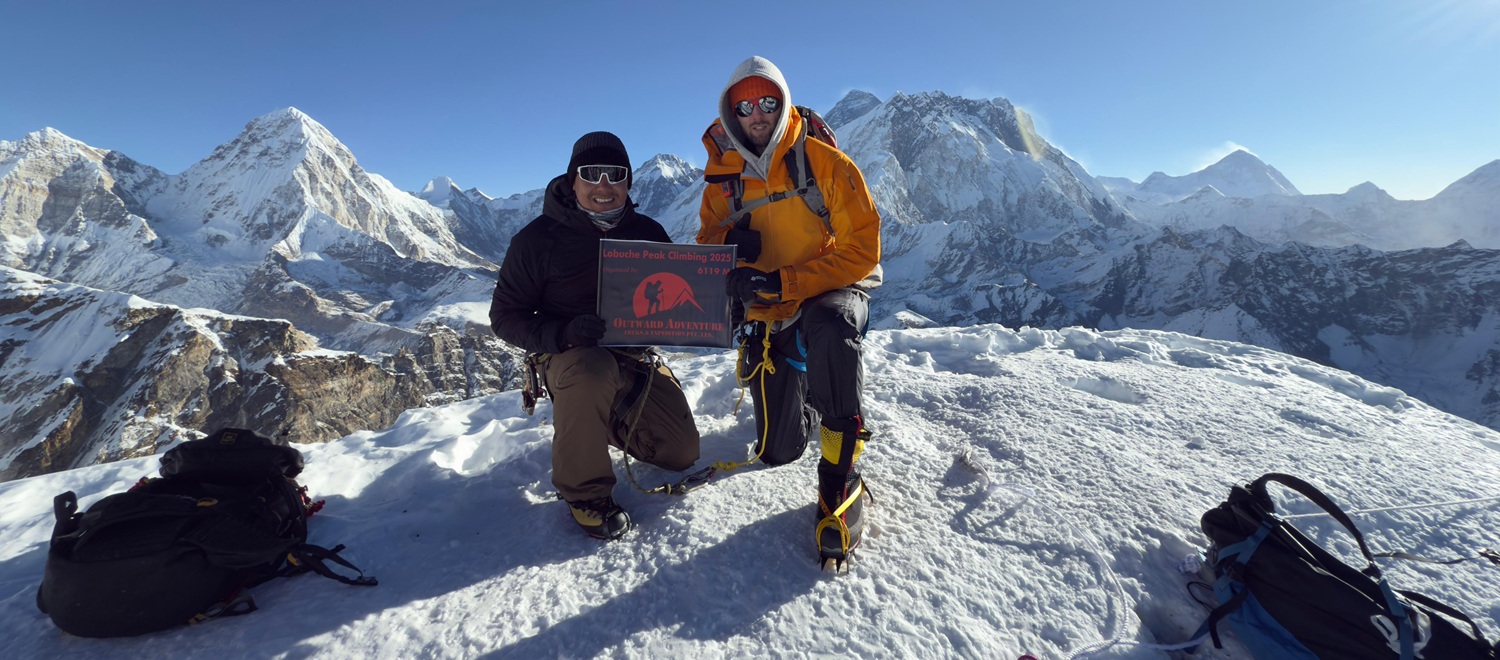
Building upon your trek-induced fitness, the expedition transitions into its first technical phase: the ascent of Lobuche East (6,119m). Serving as a formidable objective in its own right, Lobuche East is the perfect "training peak" to sharpen your technical skills before the main event. Here, under the expert guidance of our elite Sherpa team, you will practice fixed-rope climbing, crampon techniques on steep snow, and high-altitude camp management. Standing on the summit of Lobuche East provides a profound sense of achievement and offers a unique vantage point of the very route you will soon tackle on Ama Dablam. This "live" rehearsal at over 6,000m is the ultimate confidence builder, bridging the gap between high-altitude trekking and the complex, technical mountaineering that defines the Khumbu’s most beautiful spire.
With two successful high-altitude milestones behind you, the focus shifts to the crown jewel of the expedition: the incomparable Ama Dablam (6,812m). Known as the "Mother’s Necklace," this peak is widely considered the most aesthetic mountain on Earth, but its beauty belies a fierce technical challenge. The Southwest Ridge offers a sustained and exhilarating climbing experience, characterized by vertical granite on the Yellow Tower and exposed, narrow snow arêtes along the Mushroom Ridge. Because you have already spent weeks acclimatizing at EBC and on the slopes of Lobuche East, you arrive at Ama Dablam Base Camp with "super-acclimatized" blood chemistry. This strategic advantage allows for a more streamlined summit push, reducing the need for multiple exhausting rotations and maximizing your strength for the final, thin-air scramble to the top.
The cultural and spiritual dimensions of this journey are as profound as the physical ones. As we navigate the Khumbu, we move through a landscape where the mountains are considered sacred deities. From the rhythmic spinning of prayer wheels in Namche Bazaar to the aromatic juniper incense of the Tengboche Monastery, every step is a lesson in resilience and faith. We prioritize these cultural touchpoints, ensuring our climbers receive traditional blessings for safe passage. Our expedition isn't just about the mechanics of ropes and anchors; it is about building a deep, respectful connection with the Sherpa community. You will live and climb alongside the world's most accomplished mountaineers, sharing meals and stories that transform a standard climbing trip into a deeply personal and life-altering odyssey.
Safety, luxury, and professional execution are the hallmarks of Ama Dablam Expeditions. Throughout this intensive multi-peak itinerary, we provide a sanctuary of comfort at our base camps, featuring heated dining tents, high-calorie gourmet nutrition, and state-of-the-art communication systems. We understand that recovery is the secret to a successful triple-objective expedition, which is why we invest heavily in your well-being between climbs. By the time you stand on the summit of Ama Dablam, with the giants of Everest, Lhotse, and Makalu filling the horizon, you will realize that the combination of the EBC trek and Lobuche Peak was the essential foundation for your success. This is the definitive Himalayan experience, a masterclass in mountaineering that tests your limits while rewarding you with the most spectacular views on the planet.
Day 1: Arrival in Kathmandu and Transfer to the Hotel [1,338 m/4,390 ft]
Day 2: Fly to Lukla [2,840m/9,316ft] and trek to Phakding [2,610m/8,561ft]: 35 minutes flight and 3 to 4 hours trek
Day 3: Trek Phakding to Namche Bazaar [3,440m/11,284ft]: 6 to 7 hours trek
Day 4: Namche Bazaar: Acclimatization Day [3,440m/11,284ft]
Day 5: Trek Namche Bazaar to Tengboche [3,860m/12,661ft]: 5 to 6 hours trek
Day 6: Trek Tengboche to Dingboche [4,410m/14,469ft]: 5 to 6 hours trek
Day 7: Dingboche: Acclimatization Day [4,410m/14,465ft]
Day 8: Trek Dingboche to Lobuche [4,910m/16,105ft]: 5 to 6 hours trek
Day 9: Trek from Lobuche to Gorakshep [5,181 m/16,994 ft] to Everest Base Camp [5,364 m/17,594 ft] and return to Gorakshep: 8 to 9 hours
Day 10: Early morning hike to Kalapatthar [5,545 m/18,188 ft] and back to Lobuche [4940m/16,207ft]: 7 to 8 hours
Day 11: Trek Lobuche to Lobuche Peak High Camp [5,400m/17,712ft]: 3 to 4 hours
Day 12: Climb Lobuche High Camp to Lobuche East Summit [6119m/20,070 ft] and back to Pheriche [4,371 m /14,340 ft]: 8 to 10 hours
Day 13: Contingency Day (Due to Bad Weather, Acclimatization, Health Conditions, etc.)
Day 14: Trek Pheriche to Ama Dablam Base Camp [4,371 m /14,340 ft]: 5-6 hours
Day 15: Rest day and worshipping ceremony at Ama Dablam Base Camp [4,570m/14,994ft]
Day 16: Climb to Ama Dablam Camp I [5,700m/18,700ft]
Day 17: Climb to Amadablam Camp II [6,000m/19,685ft]
Day 18: Early night summit push [6,812m / 22,349ft] and back to Camp II [6,000m/19,685ft]
Day 19-20: Contingency Days (Due to Bad Weather, Acclimatization, Health Conditions, etc.)
Day 21: Trek back to Ama Dablam Base Camp [4,570m/14,994ft]
Day 22: Trek Ama Dablam Base Camp to Namche Bazaar [3,440 m/11,283 ft]: 7-8 hours
Day 23: Trek Namche Bazaar to Lukla [2,860 m/9384 ft]
Day 24: Fly back to Kathmandu [1338m/4390ft]
Day 25: International Flight [Final Departure]
Your journey begins the moment you touch down at Tribhuvan International Airport in Kathmandu, where the vibrant energy of Nepal’s capital welcomes you. After clearing customs and collecting your luggage, you will be met by a representative from Ama Dablam Expeditions holding a placard with your name.
We take the stress out of your arrival with a seamless, private transfer through the city’s bustling streets to your hotel. This initial drive offers your first glimpse of Kathmandu’s unique blend of ancient temples and modern life, set against the backdrop of the surrounding green hills.
Once at the hotel, located in the heart of the city, you can check in and unwind after your long flight. This day is intentionally kept flexible to allow you to recover from jet lag and settle into the Himalayan atmosphere.
You might choose to take a light stroll through the nearby markets to pick up any last-minute essentials or simply enjoy a quiet meal as you prepare for the gear checks and briefings scheduled for the following day. This comfortable introduction ensures you are rested and ready for the technical and physical challenges of the Ama Dablam and Lobuche peaks ahead.
After a restful night in Phakding, we begin our journey toward the legendary Sherpa capital of Namche Bazaar, following the turquoise glacial waters of the Dudh Koshi River. This 6-to-7-hour trek is one of the most scenic stretches of the entire expedition, as we crisscross the river on high suspension bridges—including the famous, dizzying Hillary Bridge—festooned with hundreds of fluttering prayer flags.
We enter the gateway of the Sagarmatha National Park at Monjo, where we register our permits before descending to the riverbed for a final flat stretch. The morning is a beautiful immersion into the high-altitude forests of pine and cedar, with the sound of yak bells providing the perfect soundtrack to our approach toward the heart of the Khumbu.
The afternoon presents our first real physical test as we tackle the steep, zig-zagging ascent through the forest known as the "Namche Hill." As we climb, we maintain a slow, steady pace to allow our bodies to adjust to the significant gain in elevation, stopping at a traditional rest point where, weather permitting, we catch our very first glimpse of Mount Everest peeking over the Lhotse-Nuptse ridge.
Finally, we crest the hill and emerge into the natural amphitheater of Namche Bazaar (3,440m). Seeing the horseshoe-shaped village carved into the mountainside for the first time is a moment of pure magic. We settle into our lodge for the evening, where the increased altitude and vibrant mountain atmosphere officially mark the beginning of our life above the clouds.
Today we dedicate ourselves to the vital process of "active acclimatization," a cornerstone of our strategy at Ama Dablam Expeditions. Rather than remaining stationary, we embrace the mountaineering philosophy of climb high, sleep low by embarking on a stunning hike to the Everest View Hotel (3,880m).
This steady ascent above the village allows our bodies to adjust to the decreased oxygen levels while rewarding us with a staggering panoramic sweep of the Khumbu’s giants. As we reach the ridge, the iconic pyramid of Everest and the massive wall of Lhotse dominate the horizon, but it is the elegant, vertical spire of Ama Dablam that truly commands our attention—offering us a profound first look at the technical challenge that awaits us later in the expedition.
After soaking in the views over a hot lemon tea on the world's highest hotel terrace, we descend back into the vibrant amphitheater of Namche Bazaar to spend the afternoon at our leisure.
Namche is the beating heart of Sherpa culture, and we take this time to explore its narrow cobblestone streets, visit the local mountaineering museum, or simply enjoy the unique high-altitude atmosphere of its famous bakeries and gear shops. This day is about more than just red blood cell production; it’s a moment to mentally prepare and bond as a team before we push deeper into the high valleys.
By returning to the lower elevation of 3,440m to sleep, we ensure our bodies recover optimally, leaving us refreshed and significantly stronger for the trek toward Tengboche tomorrow.
Leaving the vibrant streets of Namche Bazaar behind, we begin our trek on a spectacularly scenic trail that contours high above the Dudh Koshi River. This portion of the journey offers some of the most breathtaking views in the Khumbu, with the immense faces of Everest, Lhotse, and Nuptse towering in the distance, while Ama Dablam appears closer and more formidable with every mile.
We descend through lush rhododendron and blue pine forests to the riverside hamlet of Phunki Thenga for a brief rest. This tranquil spot, fueled by water-driven prayer wheels, marks the lowest point of our day before we begin the final, steady ascent through the cooling shade of the forest toward the spiritual ridge of Tengboche.
Upon reaching the wide, grassy plateau of Tengboche (3,860m), we are greeted by one of the most famous sights in the mountaineering world: the iconic Tengboche Monastery set against the dramatic backdrop of Ama Dablam. This is the spiritual heart of the Sherpa people, and we often take the opportunity to witness the afternoon prayers, where the rhythmic chanting of monks and the resonance of traditional horns provide a sense of peace and perspective.
The evening air here is crisp and thin, but the golden sunset hitting the surrounding peaks makes the 5-to-6-hour trek feel immensely rewarding. Staying here allows us to further our acclimatization in a place of profound beauty, grounding us spiritually before we move toward the higher technical objectives of Lobuche and Ama Dablam.
Descending from the spiritual heights of Tengboche, we wind our way through a beautiful forest of birch, conifers, and rhododendrons, where the trail is often dusted with light snow and the air feels increasingly crisp.
We cross the Imja Khola on a high steel bridge, moving deeper into the high-alpine zone where the lush greenery begins to give way to a more rugged, desert-like landscape of scrub juniper and tundra. Along the way, we pass through the village of Pangboche, home to the oldest monastery in the region. This is a significant moment for us, as we are now walking directly beneath the soaring ridges of Ama Dablam, gaining an intimate view of the South West Ridge route that we will eventually navigate.
As we push forward through the widening valley, the trek becomes more exposed to the elements, and we begin to feel the true power of the high-altitude sun and wind. We continue our steady ascent toward the confluence of the Imja and Khumbu valleys, eventually reaching the stone-walled fields of Dingboche (4,410m).
Known as the "Summer Valley," Dingboche is unique for its intricate network of ancient stone walls built to protect crops from the cold winds. Settling in here marks a major milestone in our expedition; we have officially crossed the 4,000m threshold. The view from our lodge is dominated by the massive eastern face of Lhotse and the "Island Peak," reminding us that we are now deep within the high-mountain sanctuary where our technical journey truly begins.
Our second scheduled acclimatization day in Dingboche is a critical juncture for our expedition's success, specifically designed to prepare our pulmonary and cardiovascular systems for the 5,000m barrier. To facilitate this, we embark on a challenging "active recovery" hike up the steep slopes of Nangkartshang Peak (5,083m), located directly above the village.
This ascent is physically demanding but serves as a vital diagnostic for how our bodies are handling the thinner air. As we climb, the rewards are immense: we gain a spectacular, unobstructed view of the entire Imja Valley, with the soaring north face of Ama Dablam, the massive south face of Lhotse, and the jagged spire of Makalu—the world's fifth-highest mountain—filling the horizon in a stunning display of tectonic power.
After spending some time at the higher elevation to stimulate red blood cell production, we descend back to the relative comfort of Dingboche for an afternoon of rest and hydration. This "climb high, sleep low" strategy ensures that we don't just survive at this altitude, but thrive, allowing our muscles to recover while our blood chemistry optimizes.
We spend the later hours in the village, perhaps visiting one of the world's highest bakeries or simply organizing our gear for the upcoming move toward Lobuche. By the end of this day, the team is typically feeling the "altitude lungs" kicking in, providing the physical confidence and mental clarity needed to transition from the trekking trails to the high-alpine slopes of our first peak objective.
Leaving the sheltered valley of Dingboche, we begin our ascent toward the high-alpine moraine, where the landscape transforms into a stark, dramatic world of rock and ice. The trail leads us across a wide, glacial plateau toward Thukla, the final stopping point before we tackle the steep climb to the top of the Thukla Pass.
This climb is a poignant part of our journey, as the crest of the pass is home to the climbers' memorials—rows of stone chortens dedicated to those who lost their lives on Everest and the surrounding peaks. Standing here, amidst the fluttering prayer flags and the silent stone monuments, we feel a deep sense of humility and a renewed respect for the mountains we are about to climb.
From the top of the pass, the trail levels out as we follow the lateral moraine of the massive Khumbu Glacier toward the small settlement of Lobuche (4,910m).
The air here is noticeably thinner and the temperature drops significantly as the sun dips behind the towering ridges of Nuptse and Pumori. Lobuche feels like a true high-altitude outpost, tucked beneath the jagged peaks and overlooking the frozen ripples of the glacier.
As we settle into our lodge for the night, the sound of shifting ice and the sight of the stars over the Himalayan giants remind us that we are now on the doorstep of our technical objectives. This 5-to-6-hour trek is the final transition before we move toward Everest Base Camp and the technical slopes of Lobuche East.
Today marks one of the most significant milestones of our journey as we push toward the ultimate destination for any Himalayan enthusiast: Everest Base Camp. We begin our morning by navigating the rugged, undulating lateral moraine of the Khumbu Glacier toward Gorak Shep, the highest permanent settlement in the region.
This stretch of the trail is a starkly beautiful moonscape of gray rock and shifting ice, where we must maintain a slow, rhythmic pace to manage the thin air at nearly 5,200m. After a quick, high-energy lunch at our lodge in Gorak Shep, we leave our heavy packs behind and strike out for the base of the world’s highest peak, walking alongside the frozen ripples of the glacier that have carved this valley over millennia.
The trek to Everest Base Camp (5,364m) is a test of endurance and spirit, taking us through a labyrinth of ice towers and rocky debris. As we finally reach the colorful prayer flags marking the site, the sense of accomplishment is profound. We find ourselves standing at the foot of the notorious Khumbu Icefall, a cascading river of ice that serves as the gateway to the South Col route.
While the summit of Everest remains hidden behind the massive walls of Nuptse and Lhotse, the raw energy of the site—where so much mountaineering history has been written—is palpable. After spending time soaking in the atmosphere and capturing photographs of this iconic location, we begin the long trek back to Gorak Shep.
By the time we return for a well-earned dinner, we have completed a grueling 8-to-9-hour day, but the "super-acclimatization" gained today is the secret weapon that will carry us through our upcoming climbs on Lobuche and Ama Dablam.
Our morning begins in the freezing, pre-dawn darkness as we set out for the summit of Kala Patthar (5,545m), the highest trekking point of our expedition. The climb is a steady, rhythmic grind up a steep, rocky ridge, but every step upward is rewarded as the first light of day begins to touch the surrounding giants.
Reaching the summit of Kala Patthar is an unforgettable moment; from this vantage point, we are treated to the most iconic and unobstructed view of Mount Everest’s windswept summit, standing alongside the massive black wall of Nuptse and the elegant cone of Pumori.
Watching the sunrise turn the Everest massif from a cold grey to a brilliant, glowing gold provides a powerful sense of perspective and serves as a final "high-point" for our acclimatization before we pivot toward our technical climbing goals.
After savoring the 360-degree panorama of the Khumbu’s highest peaks, we begin a rapid descent back to Gorak Shep for a hot, hearty breakfast. With our bodies now "super-acclimatized" after reaching over 5,500m, we pack our gear and retrace our steps along the moraine, heading back down to the lower elevation of Lobuche (4,940m).
This move is strategic; descending nearly 600m after our highest exertion allows our bodies to recover much faster and ensures we have the energy required for the technical work ahead. By the time we settle into our lodge in Lobuche after a grueling 7-to-8-hour day, we have completed the trekking phase of our journey.
We are now stronger, leaner, and fully prepared to transition from trekkers to climbers as we look toward the slopes of Lobuche East tomorrow.
Today we officially transition from the trekking trails to the technical terrain of the high peaks as we move toward Lobuche Peak High Camp. This 3-to-4-hour journey begins with a departure from the main EBC trail, leading us across a rugged, rocky landscape toward the base of the mountain.
We navigate a series of steep, switchbacking paths over loose scree and granite slabs, gaining elevation steadily. This move is purposely shorter in duration to allow us plenty of time for gear organization and final technical rehearsals.
As we reach the High Camp at 5,400m, the environment becomes noticeably more "alpine"—we are no longer in a village, but in a focused mountain camp perched on a rocky ridge overlooking the frozen expanse of the Khumbu Glacier and the towering peaks of Cholatse and Tawache.
Upon arrival at High Camp, our elite Sherpa team will have the tents established and a warm kitchen operational. We spend the afternoon in a vital technical briefing and equipment check; this is where we "dial in" our harnesses, crampons, and ice axes.
We practice our fixed-rope techniques and jumaring on nearby rock or ice sections to ensure everyone is comfortable with the systems we will use during our pre-dawn push. The atmosphere in camp is one of quiet focus and shared excitement.
We enjoy an early dinner and settle into our sleeping bags as the sun sets, knowing that in just a few hours, we will be waking up to begin our summit bid for Lobuche East.
Our summit push begins in the crisp, starlit hours long before dawn, as we navigate the initial rocky slabs and scramble toward the crampon point. As we transition onto the main glacier, we rope up and begin the steady ascent of the snow and ice slopes that lead toward the summit ridge.
This is where our technical training pays off; we move rhythmically using our ascenders on fixed lines, feeling the bite of our crampons into the firm morning crust. Reaching the summit of Lobuche East (6,119m) as the sun rises over the horizon is a transcendent experience.
From this 6,000m vantage point, we are granted a breathtaking view of the entire Everest massif and a clear, intimidatingly beautiful look at the South West Ridge of Ama Dablam—the ultimate objective that still lies ahead.
The descent is a focused exercise in technical rope work and stamina as we retrace our steps back to High Camp to pack our gear and enjoy a quick, celebratory hot drink. Rather than staying at the high elevation, we continue our descent, dropping significantly down into the oxygen-rich air of the valley.
Following the moraine and passing through the familiar memorials of the Thukla Pass, we eventually reach the wide, grassy flats of Pheriche (4,371m). This massive descent, totaling nearly 1,800m of vertical drop over an 8-to-10-hour day, is a classic "climb high, sleep low" strategy.
By the time we settle into our lodge in Pheriche, the increased oxygen levels feel like a tonic, allowing our muscles to recover and our bodies to recharge in preparation for the move to Ama Dablam Base Camp.
In the unpredictable environment of the high Himalayas, the Contingency Day is perhaps the most critical component of our expedition strategy. At Ama Dablam Expeditions, we recognize that even the most meticulous plans must remain flexible in the face of the mountain's volatile temperament.
Whether it is an unexpected storm system rolling in from the south, a sudden drop in barometric pressure, or the need for a team member to take an extra 24 hours to resolve a minor health issue or acclimatization lag, this "buffer" day provides the essential safety margin required for a successful summit.
By having this time built into our itinerary, we remove the pressure of a "forced" summit bid, allowing us to wait for the perfect weather window and ensuring that every climber is at 100% physical and mental capacity before moving onto the technical ridges.
The beauty of the contingency day lies in its versatility; if not needed for weather, it can be strategically deployed as a "Rest and Recovery" day at one of the lower camps.
During this time, we focus on high-calorie nutrition, hydration, and mental preparation, often utilizing the expertise of our Sherpa team to conduct additional technical rehearsals or simply to enjoy the camaraderie of the group.
In a pursuit where timing is everything, this day represents our commitment to safety and excellence. It ensures that when we finally make our move toward the summit of Lobuche East or Ama Dablam, we are doing so under the best possible conditions, maximizing both our probability of success and our collective safety.
After the high-altitude exertion of Lobuche East, our journey takes a focused turn toward the true masterpiece of the Khumbu as we trek from Pheriche to Ama Dablam Base Camp (4,600m). We begin by descending slightly toward the Imja Khola, crossing the river before beginning a steady, scenic climb that contours around the base of the mountain.
Unlike the bustling trekking hubs we’ve visited, the trail to Base Camp feels more intimate and purposeful. As we ascend the grassy ridges, the massive granite walls and hanging glaciers of Ama Dablam grow increasingly dominant, looming above us with an architectural precision that is both beautiful and humbling.
Arriving at Base Camp is a special moment; this will be our home and sanctuary for the coming weeks. We emerge onto a wide, grassy meadow—a hidden sanctuary nestled beneath the mountain’s towering Southwest Ridge—where our permanent camp is already established by our hardworking staff.
After the 5-to-6-hour trek, you’ll find a level of comfort designed for high-stakes recovery: personal sleeping tents, a carpeted dining tent, and a dedicated kitchen team ready to fuel your upcoming climb. This is no longer a trekking stop; it is a high-performance headquarters.
As we settle in and watch the sunset turn the "Mother’s Necklace" into a silhouette of gold and purple, the reality sets in—the approach is over, and the technical ascent of one of the world's most iconic peaks is about to begin.
Today is a day of profound significance, shifting our focus from the physical rigors of the trail to the spiritual traditions that define Himalayan mountaineering. We pause at Ama Dablam Base Camp (4,570m) for a dedicated rest day, but more importantly, to participate in the Puja ceremony.
For our Sherpa team, no one sets foot on the upper mountain until the local deities have been honored and permission has been sought for a safe passage. We gather around a stone altar (Lhabatoba) adorned with colorful prayer flags, juniper incense, and offerings of food and drink.
As the Lama chants sacred mantras and the smoke of the incense drifts toward the summit, a deep sense of calm and unity settles over the team. We are no longer just climbers; we are guests of the mountain, seeking its protection for the weeks ahead.
Beyond the spiritual ceremony, this rest day is a vital period for physiological recovery and mental preparation. Having recently climbed to over 6,000m on Lobuche East, our bodies are now utilizing this lower elevation to repair muscle tissue and further optimize blood chemistry.
We spend the afternoon organizing our technical hardware—sharpening crampons, checking harnesses, and preparing the high-altitude snacks that will fuel our push to Camps 1 and 2.
The atmosphere in Base Camp is one of relaxed professionalism; we share stories in the dining tent, hydrate heavily, and keep a watchful eye on the weather patterns swirling around the "Mother’s Necklace." This stillness is the necessary prelude to the intense technical verticality that begins tomorrow.
Leaving the comfort of Base Camp behind, we officially begin our technical ascent of Ama Dablam, moving from the grassy meadows into a world of steep rock and granite. The climb to Camp 1 (5,700m) is a significant day that transitions us from trekking into the realm of true mountaineering.
We start by following a winding trail through the high-alpine scrub, which gradually gives way to a massive boulder field. This section requires careful footwork as we scramble over "slab" rock, eventually reaching the base of the Southwest Ridge.
Here, we begin our first taste of fixed-line climbing, using our ascenders to navigate the steep, rocky steps that lead us onto the narrow platforms where our tents are perched.
The location of Camp 1 is nothing short of spectacular, literally carved into the side of the ridge with sheer drops on either side. Reaching this altitude of 5,700m is a physical milestone, but the reward is an intimate view of the technical challenges ahead, including the formidable "Yellow Tower" that guards the route to Camp 2.
As we settle into our high-altitude tents for the night, the air is thin and the silence is absolute, broken only by the sound of the wind or the distant shift of ice. This is our first night on the mountain proper, and the sunset from this elevation—watching the shadows of the Himalayas stretch across the valleys below—is a sight that stays with a climber forever.
The move from Camp 1 to Camp 2 (6,000m) is widely considered the most exhilarating and technical day of the entire expedition. This is where Ama Dablam truly earns its reputation as a world-class rock-climbing objective. Almost immediately upon leaving Camp 1, we find ourselves on the crest of the Southwest Ridge, navigating a series of narrow, exposed granite sections.
The climbing is sustained and physical, requiring focused footwork and a steady hand on the fixed lines. The exposure here is breathtaking; looking down between your boots, you can see thousands of feet of air falling away into the glacial basins below, a sensation that reminds you why this peak is the ultimate prize for technical mountaineers.
The centerpiece of this day is the legendary Yellow Tower, a vertical 15m pitch of high-quality granite that guards the entrance to Camp 2. Using a combination of technical rock movements and our ascenders, we navigate this iconic feature, which is graded at roughly 5.8 (French 4c/5a) but feels significantly harder in the thin air at 6,000m.
Cresting the top of the Yellow Tower brings us to the "Eagle’s Nest"—the improbable location of Camp 2. This is perhaps the most spectacular campsite in the world, with tents perched on tiny, precarious rock ledges surrounded by vertical drops. Settling in here, we are now poised at the transition point where the granite ridge ends and the world of snow and ice begins, ready for the final push toward the summit.
Our summit bid begins in the profound silence of the high-altitude night, usually around midnight, as we step out from the precarious ledges of Camp 2 into a world of vertical ice and biting cold. The climb immediately becomes a masterpiece of technical mountaineering as we tackle the Grey Tower, a steep mix of rock and ice that requires total focus. From there, we navigate the Mushroom Ridge, a narrow, undulating spine of snow that demands perfect balance.
The air is at its thinnest here, and every breath is a conscious effort as we approach the Dablam, the massive hanging glacier that gives the mountain its name. Navigating the steep snow slopes to the right of this ice giant, we push through the final, grueling headwall, where the incline and the altitude test the very limits of our resolve.
As the first light of dawn begins to bleed across the horizon, we crest the final slope and stand upon the summit of Ama Dablam (6,812m). The view is unparalleled: the massive south face of Everest, the sprawling Lhotse-Nuptse wall, and the distant peaks of Makalu and Cho Oyu are all laid out before us in a 360-degree Himalayan panorama. Standing on this iconic spire—a peak we have watched from the valleys for weeks—is a moment of pure, crystalline achievement.
However, we keep our celebration brief; the technical descent is just as demanding as the ascent. We begin a series of focused rappels and down-climbing, navigating back past the Dablam and over the Mushroom Ridge. By the time we pull back into the familiar, cramped platforms of Camp 2 (6,000m), we have completed a massive 10-to-12-hour journey, exhausted but fueled by the incredible realization that we have stood atop the "Mother's Necklace."
In the high-stakes environment of a 6,000m peak, the Contingency Day is our most vital safety net. At Ama Dablam Expeditions, we build this flexibility into our itinerary to account for the "known unknowns" of Himalayan climbing. Whether we are faced with a sudden shift in the jet stream bringing high winds, a heavy afternoon snowstorm, or a team member needing an extra 24 hours to recover from the physical toll of the Yellow Tower, this day ensures we never have to "force" a summit bid.
It allows us to wait for the optimal weather window—those rare, calm moments when the mountain invites us upward—ensuring that we move toward the 6,812m summit only when conditions are at their safest.
If the weather remains clear and the team is feeling strong, this day isn't wasted; it becomes a day of Active Recovery. We use the time to hydrate aggressively, consume high-calorie meals to offset the massive energy expenditure of the technical ridges, and perform final equipment tune-ups.
For many, this day provides the mental breathing room needed to process the intensity of the climb so far and to visualize the final push. By prioritizing patience over haste, we ensure that every climber has the best possible chance to stand on the summit with enough energy reserved for a safe descent.
Maintaining a second Contingency Day is a strategic hallmark of a professional expedition. At this elite level of mountaineering, we recognize that the window for a successful summit on Ama Dablam is often narrow and unforgiving.
By holding a secondary buffer, we provide ourselves the ultimate tactical advantage: the ability to wait out a multi-day storm system or allow a climber to fully overcome a temporary bout of altitude sickness without compromising the entire team's objectives. In the thin air above 6,000m, patience is often the difference between a forced retreat and a triumphant ascent.
This additional day also serves as a critical "physical reserve." The technical nature of the Southwest Ridge—with its vertical granite and exposed ice—places an immense strain on the central nervous system and muscle fibers. If the first contingency day was used for weather, this second day can be utilized to ensure the team is not spread too thin.
We focus on "forced rest," deep hydration, and oxygen saturation, allowing the body's chemistry to stabilize. At Ama Dablam Expeditions, we view these days not as "delays," but as essential investments in our safety margin, ensuring that when we finally commit to the summit push, we do so with maximum clarity, strength, and confidence.
Descending from the vertical world of the high camps, we begin the final technical phase of our journey: the return to Ama Dablam Base Camp (4,570m). After the intense focus of the summit push, this descent requires a different kind of discipline.
We carefully rappel the steep granite of the Yellow Tower and navigate the exposed steps of the Southwest Ridge, feeling the air grow perceptibly thicker and warmer with every hundred meters we drop. The transition from the stark, monochrome world of rock and ice back to the first signs of alpine vegetation is a sensory relief, marking our successful exit from the "death zone" and our return to the safety of the lower elevations.
Upon reaching the wide, grassy plateau of Base Camp, the atmosphere shifts from high-stakes concentration to pure celebration. We are greeted by our kitchen and support staff with warm congratulations and perhaps a celebratory feast—a welcome reward after days of high-altitude rations.
Dropping back to 4,570m allows our bodies to finally begin a deep recovery process; the increased oxygen levels feel like a luxury, and the comfort of a full-sized tent and a proper mattress is unparalleled.
We spend the afternoon sharing stories of the climb, organizing our gear, and reflecting on the incredible feat of standing atop the "Mother's Necklace." This evening at Base Camp is one of the most rewarding of the expedition, filled with a profound sense of camaraderie and the quiet satisfaction of a mission safely accomplished.
Leaving the sanctuary of Base Camp, we begin a long but exhilarating descent that feels like a victory lap through the Khumbu Valley. The 7-to-8-hour trek back to Namche Bazaar (3,440m) is a journey of returning life; as we drop in elevation, the stark alpine tundra gives way to hardy shrubs, then to the fragrant juniper and rhododendron forests we passed weeks ago.
We cross the Imja Khola and pass through the familiar villages of Pangboche and Tengboche, where the air feels incredibly rich and heavy with oxygen. Every step downward brings a renewed sense of physical energy, and the once-challenging inclines now feel like effortless strolls thanks to our elite levels of acclimatization.
The final stretch takes us through the deep forests and over the high suspension bridges that lead into the horseshoe-shaped basin of Namche. Arriving back in the "Sherpa Capital" is a culture shock in the best way possible. After the isolation of the high camps, the sights and sounds of Namche—the smell of fresh coffee from the bakeries, the chatter in the local pubs, and the luxury of a hot shower—are a sensory feast.
We settle back into a comfortable lodge, finally able to change out of our mountain gear. This evening is usually marked by a celebratory dinner, where we toast our success and reflect on the journey from the technical granite of the Yellow Tower to the vibrant streets of this bustling mountain town.
The final day of our trekking journey is a long but rewarding 7-to-8-hour descent from Namche Bazaar back to Lukla [2,860m]. We begin by tackling the steep "Namche Hill" for the last time, though with our high-altitude lungs, the descent feels effortless.
As we cross the high suspension bridges over the turquoise Dudh Koshi River—including the iconic Hillary Bridge—we leave the high mountains behind and re-enter the lush, pine-scented forests of the lower valley. The air is now thick and warm, and the trail is alive with the sounds of local life, mule trains, and the rushing river.
As we pass through the familiar villages of Phakding and Monjo, there is a profound sense of closure. The peaks we recently stood upon are now distant giants on the horizon. The final climb into Lukla is often the most emotional part of the trek; it is a physical reminder of how far we’ve come since we first landed on this tiny airstrip.
Arriving in Lukla, we check into our lodge for one final night in the mountains. This evening is a special celebration—a chance to share a final meal with our incredible Sherpa team and local staff, whose expertise and hard work made our summit of Ama Dablam possible. It’s a night of music, reflection, and deep camaraderie before we catch our morning flight back to the vibrant energy of Kathmandu.
The final chapter of our Himalayan odyssey begins with an early morning at the Lukla airstrip, where we wait for the familiar hum of the Twin Otter engines.
The flight back to Kathmandu (1,338m) is a thrilling 35-minute transition; as we lift off from the short, uphill runway, we get one last breathtaking look at the high peaks of the Khumbu before the landscape softens into the lush, terraced green hills of the middle mountains.
Landing in the capital, the sudden influx of warmth, traffic, and urban energy is a stark contrast to the silent, frozen ridges of the "Mother’s Necklace," marking our official return to civilization.
Upon arrival, we return to the comfort of our hotel for some well-earned relaxation. The afternoon is yours to enjoy—perhaps a visit to a local spa to soothe tired muscles or a final stroll through the vibrant streets of Thamel to pick up last-minute souvenirs.
In the evening, we gather for a farewell celebration dinner. It is a time to trade stories, share photos, and reflect on the incredible physical and mental journey we have shared. From the technical granite of the Yellow Tower to the crystal-clear sunrise on the summit of Ama Dablam, we celebrate not just the peak reached, but the resilience and camaraderie that defined the expedition.
Our journey reaches its conclusion as we transition from the heights of the Himalayas to your final departure from Kathmandu. After a final breakfast at the hotel, we provide a private transfer to Tribhuvan International Airport, ensuring you arrive well ahead of your flight.
As you check in and move through the terminal, the physical weight of your mountain gear is a reminder of the vertical world you just conquered—a stark contrast to the bustling city life below.
The flight home offers one last opportunity to look out the window at the snow-capped giants of the Great Himalayan Range. You leave Nepal not just with a summit certificate, but with the mental grit and perspective that only a technical expedition of this caliber can provide.
The camaraderie of the team, the smell of juniper incense from the Puja, and the silent, thin air of the 6,812m summit are experiences that will resonate long after you return to sea level.
Transportation
Accommodation and Food
Staff
Permits and Taxes
Additional

Technical equipment provided: fixed ropes, carabiners, high-altitude tents. Personal gear checklist (rentals available):
Technical Climbing Equipment
Footwear
Clothing & Layering
Lightweight liner gloves
Bags & Storage
Sleeping & Camping
Hydration & Food
Electronics
Personal Medical & Safety
Documents & Essentials
The most critical items include high-altitude boots, crampons, harness, helmet, ice axe, ascender, descender, technical gloves, glacier glasses, goggles, down suit, expedition parka, sleeping bag and reliable climbing layers.
Note: Equipment supplied by the expedition company can vary. Confirm which technical and group equipment is provided before purchasing or renting your gear.
The Ama Dablam Expedition with Lobuche Peak Climbing and EBC Trek is a combined 25-day Himalayan adventure that includes the Everest Base Camp trek, Kala Patthar hike, Lobuche East Peak climbing at 6,119 m, and the Ama Dablam summit at 6,812 m. The itinerary combines high-altitude trekking with technical peak climbing, allowing climbers to experience the Khumbu region while progressively gaining altitude and climbing experience.
This combined expedition is a technically and physically demanding Himalayan adventure. The route involves high-altitude trekking to Everest Base Camp, climbing Lobuche East at 6,119 m, and progressing to the technically demanding Ama Dablam at 6,812 m. Climbers should have appropriate high-altitude experience, physical conditioning, and technical mountaineering skills, including crampon use and fixed-rope climbing. The itinerary also includes acclimatization and contingency days to accommodate weather, health, and altitude-related considerations.
Lobuche East Peak is included as an intermediate climbing objective before Ama Dablam. According to the itinerary, climbers first complete the EBC and Kala Patthar section before ascending Lobuche East to 6,119 m. This provides an opportunity to gain additional high-altitude climbing experience and practice techniques such as fixed-rope movement and crampon use before attempting the higher and more technical Ama Dablam climb.
The complete Ama Dablam, Lobuche Peak and Everest Base Camp expedition takes 25 days according to the published itinerary. The journey begins in Kathmandu, continues through Lukla, Namche Bazaar and the Everest region, reaches Everest Base Camp and Kala Patthar, climbs Lobuche East, and then proceeds to Ama Dablam Base Camp and the Ama Dablam summit. The itinerary includes contingency days for weather, acclimatization, and health-related considerations.
The expedition is offered during spring and autumn, the two seasons listed for this itinerary. These periods are commonly used for Himalayan climbing and trekking because expedition planning can take advantage of established seasonal climbing windows. However, actual mountain conditions can vary, so summit attempts remain dependent on weather, route conditions, acclimatization, and the expedition team's assessment.