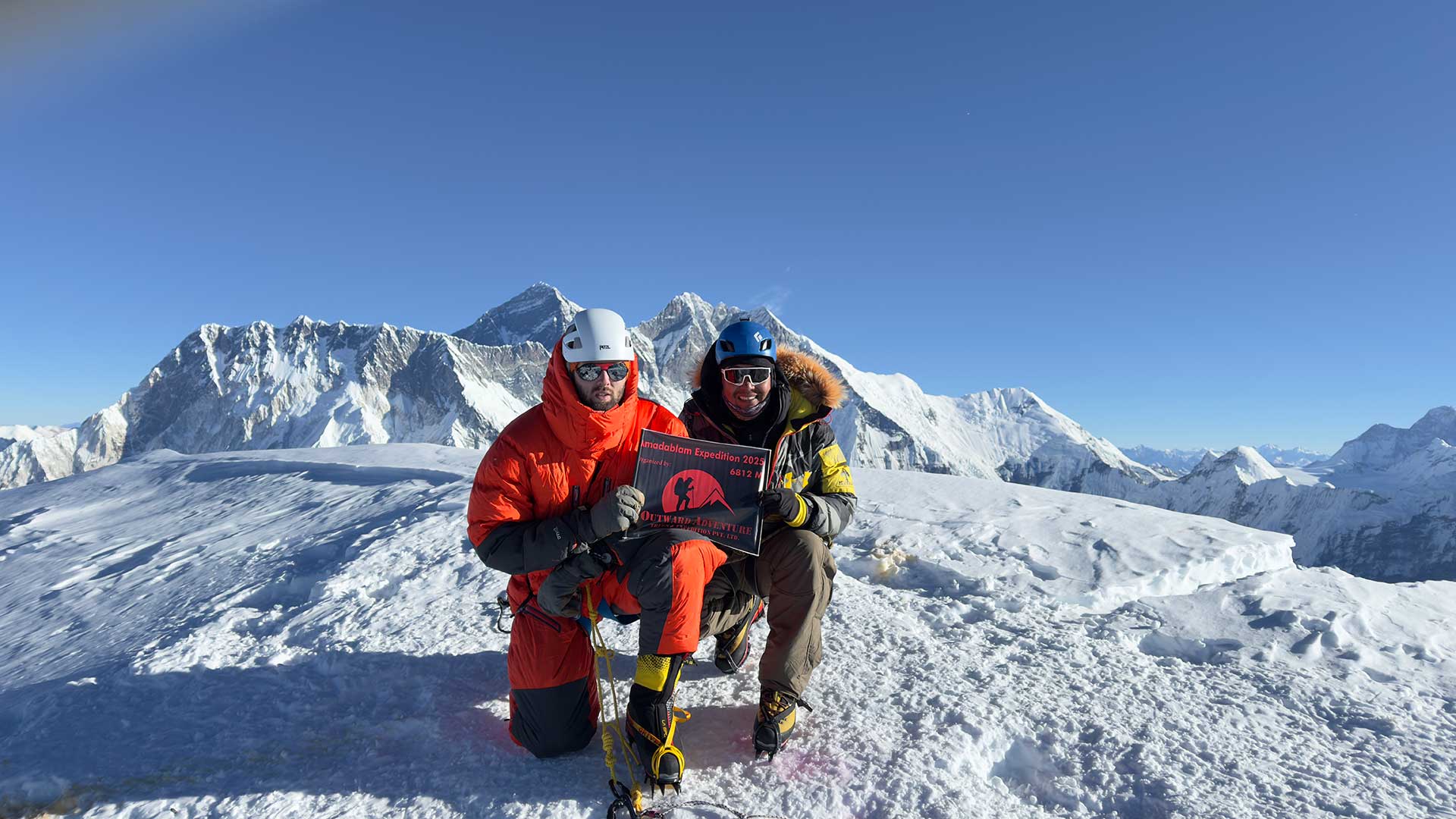
The Ama Dablam Expedition, combined with the iconic Everest Base Camp (EBC) trek, represents the ultimate Himalayan odyssey, seamlessly blending a world-class high-altitude trek with one of the most technical and aesthetically stunning climbs on the planet. This journey begins in the vibrant heart of Kathmandu before whisking you away on a breathtaking flight to Lukla, the gateway to the Khumbu. As we journey through the lush rhododendron forests and across the suspension bridges of the Sagarmatha National Park, the first half of our expedition focuses on the legendary trail to Everest Base Camp. This phase is not merely a "warm-up"; it is a vital period of physiological adaptation and cultural immersion, allowing your body to habituate to the thinning air while you walk in the footsteps of mountaineering history, culminating in the awe-inspiring sights of the Khumbu Icefall and the panoramic sunrise from the summit of Kala Patthar.
Once the trek to EBC has fortified your endurance and acclimatization, our focus shifts toward the "Mother’s Necklace"—the incomparable Ama Dablam. Standing at 6,812m, Ama Dablam is often cited as the most beautiful peak in the world, but its elegant ridges demand genuine respect and technical prowess. Unlike the gradual slopes of many trekking peaks, the South West Ridge of Ama Dablam offers a pure climbing experience involving steep granite rock, exposed narrow ridges, and vertical ice sections. Moving from Base Camp to the higher camps, you will encounter legendary features like the Yellow Tower and the Mushroom Ridge, where the climbing is as exhilarating as the views are vast. This segment of the trip is designed for those who seek to transition from being high-altitude trekkers to true Himalayan mountaineers, supported by our elite team of climbing Sherpas.
Strategically, the inclusion of the Everest Base Camp trek serves as the perfect "live-in" acclimatization rotation. By spending multiple nights above 5,000m and reaching the heights of Kala Patthar (5,545m), you arrive at Ama Dablam Base Camp (4,600m) feeling exceptionally strong and ready to tackle the technical rigors of the mountain. This methodology significantly increases the safety margin and the probability of a successful summit, as your body is already optimized for the aerobic demands of high-altitude rock and ice work. Instead of spending your first weeks on the mountain in repetitive rotations, you arrive at the foot of the Southwest Ridge with your "altitude lungs" fully developed, ready to focus entirely on the technicality and beauty of the ascent.
Beyond the physical and technical challenges, this expedition is a deep dive into the spiritual and cultural heart of the Sherpa people. We stop at ancient monasteries like Tengboche and Pangboche, where we seek blessings for a safe passage on the mountain, and we share tea in the stone houses of villages that have raised generations of Everest conquerors. The camaraderie built during the long days on the EBC trail translates into a cohesive team dynamic by the time we establish our high camps on Ama Dablam. You aren't just a visitor in the Khumbu; for these several weeks, you are a part of its rhythm, living among the yaks, the prayer flags, and the rhythmic chanting of the monks, all while keeping your eyes fixed on the vertiginous white spire that beckons from above.
As you stand on the summit of Ama Dablam, the world falls away in a 360-degree panorama of 8,000m giants, including Everest, Lhotse, and Makalu. The sense of achievement is unparalleled, representing the successful marriage of a bucket-list trek and a premier mountaineering objective. We at Ama Dablam Expeditions take pride in providing a comprehensive support system—from high-quality logistics and gourmet base camp meals to the most experienced guides in the industry—ensuring that your journey from the bustling streets of Namche Bazaar to the narrow, icy summit of "The Matterhorn of the Himalayas" is safe, professional, and life-changing. This is more than a trip; it is a definitive chapter in your mountaineering career, combining the soul of a trekker with the heart of a climber.
Day 1: Arrival in Kathmandu (1,338 m/4,390 ft)
Day 2: Fly to Lukla (2,840m/9,316ft) and trek to Phakding (2,610m/8,561ft) - 35 minutes flight and 3 to 4 hours trek
Day 3: Trek Phakding to Namche (3,440m/11,284ft) - 6 to 7 hours trek
Day 4: Namche Bazaar: Acclimatization Day (3,440m/11,284ft)
Day 5: Trek to Tengboche (3,860m/12,661ft) - 5 to 6 hours trek
Day 6: Trek to Dingboche (4,410m/14,469ft) - 5 to 6 hours trek
Day 7: Dingboche: Acclimatization Day (4,410m/14,465ft)
Day 8: Trek to Lobuche (4,910m/16,105ft) - 5 to 6 hours trek
Day 9: Trek from Lobuche to Gorakshep (5,181 m/16,994 ft) to EBC (5,364 m/17,594 ft) and return Gorakshep: 8-9 hours
Day 10: Early morning hike to Kalapatthar (5,545 m/18,188 ft) and descend to Pheriche (4,210 m/13,809 ft): 6-7 hours
Day 11: Trek to Ama Dablam Base Camp (4,570m/14,994ft): 5-6 hours
Day 12: Rest day and worshipping ceremony at Ama Dablam Base Camp (4,570m/14,994ft)
Day 13: Climb to Ama Dablam Camp I (5,700m/18,700ft)
Day 14: Climb to Amadablam Camp II (6,000m/19,685ft)
Day 15: Early night summit push (6,812m / 22,349ft) and back to Camp II (6,000m/19,685ft)
Day 16: Contingency day in case of bad weather
Day 17: Trek back to Ama Dablam Base Camp (4,570m/14,994ft)
Day 18: Trek Ama Dablam Base Camp to Namche Bazaar (3,440 m/11,283 ft): 7-8 hours
Day 19:Trek Namche Bazaar to Lukla (2,860 m/9384 ft)
Day 20: Fly back to Kathmandu (1338m/4390ft)
Day 21: International Flight (Final Departure)
Transportation
Accommodation and Food
Staff
Permits and Taxes
Additional
Technical equipment provided: fixed ropes, carabiners, high-altitude tents. Personal gear checklist (rentals available):
Technical Climbing Equipment
Footwear
Clothing & Layering
Lightweight liner gloves
Bags & Storage
Sleeping & Camping
Hydration & Food
Electronics
Personal Medical & Safety
Documents & Essentials
Most Important for Ama Dablam Expedition with Lobuche Peak Climbing and EBC Trek
The most critical items include high-altitude boots, crampons, harness, helmet, ice axe, ascender, descender, technical gloves, glacier glasses, goggles, down suit, expedition parka, sleeping bag and reliable climbing layers.
Note: Equipment supplied by the expedition company can vary. Confirm which technical and group equipment is provided before purchasing or renting your gear.
The Ama Dablam Expedition with Everest Base Camp Trek is a combined Himalayan adventure that takes climbers from Lukla through the Everest Base Camp route before continuing to Ama Dablam Base Camp and the summit. The itinerary includes Everest Base Camp at 5,364 m, Kala Patthar at 5,545 m, and the Ama Dablam summit at 6,812 m (22,349 ft). This combination brings together high-altitude trekking, acclimatization, and technical mountaineering on one expedition.
The expedition is classified as Difficult and involves both demanding high-altitude trekking and technical climbing. After reaching Everest Base Camp and Kala Patthar, climbers continue toward Ama Dablam Base Camp and higher camps at 5,700 m and 6,000 m. The Ama Dablam route includes steep rock, exposed ridges, and technical ice sections, so appropriate mountaineering experience, physical preparation, acclimatization, and technical climbing skills are important.
The EBC portion provides a progressive approach to higher elevations before the technical climbing phase. The itinerary includes acclimatization days at Namche Bazaar and Dingboche, followed by Everest Base Camp at 5,364 m and Kala Patthar at 5,545 m. After descending toward Pheriche, the itinerary continues to Ama Dablam Base Camp at 4,570 m before the climbing phase begins. However, acclimatization does not eliminate altitude-related risks, and conditions can vary between individuals.
The published itinerary is designed as a 22-day expedition. The journey includes arrival in Kathmandu, the flight to Lukla, trekking through the Everest region, Everest Base Camp and Kala Patthar, the approach to Ama Dablam Base Camp, climbing through Camp I and Camp II, the summit attempt at 6,812 m, a contingency day, and the return to Kathmandu. The itinerary specifically includes a weather contingency day for the climbing phase.
The expedition page lists spring and autumn as the climbing seasons. These are the seasons specified by Ama Dablam Expeditions for this itinerary. The actual timing of a summit attempt can still depend on weather, route conditions, acclimatization, and mountain safety assessments. The expedition also includes a contingency day to accommodate unfavorable weather during the climbing period.